Download the Full PDF
Unify identity data across HR, IAM, cloud and apps into one source of truth.
This whitepaper explores how modern security teams are solving a growing challenge: fragmented identity data. Based on best practices from leading organisations, it outlines how an Identity Data Fabric helps unify identity silos into one data platform.
✅ Why more tools create blind spots
✅ 4 steps to full IAM visibility
✅ Based on NIS 2 & ISO 27001
✅ For CISOs and IAM leaders
The Problem: More Tools, Less Visibility
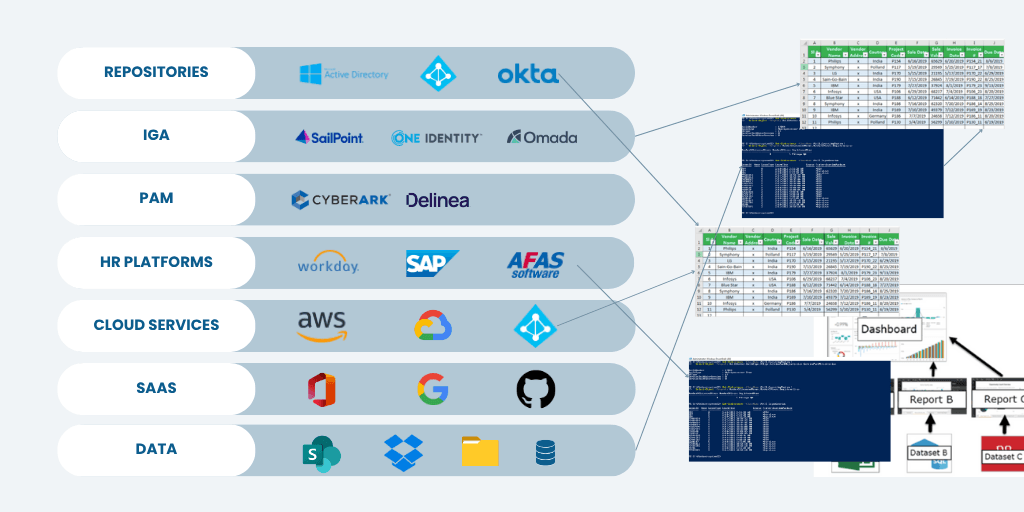
Companies that need full visibility into users and access often face one big problem: more tools, less IAM visibility. Identity data is scattered across AD, IGA platforms, SaaS apps, HR systems, and PAM tools.
With identity data spread across so many silos, IAM reporting becomes fragmented, integration is limited, and overall visibility into who has access to what is lacking.
The Consequences of Identity Data Chaos
This data chaos manifests in three key areas: security, compliance, and IAM operations.
Security
Organisations cannot identify orphaned accounts, discover privileged accounts, track excessive permissions, or know which former employees still have active access. Every blind spot is an open door for attackers.
Compliance
Without a unified view, it becomes nearly impossible to prove that all systems have been reviewed, to identify who can access privacy-sensitive folders, or to produce the evidence required for ISO 27001 or NIS 2 audits.
IAM Operations
Data chaos makes it harder to define appropriate roles, ensure that all groups have an owner assigned, label high-privilege accounts, or resolve synchronisation errors between critical systems.
What is an Identity Data Fabric?
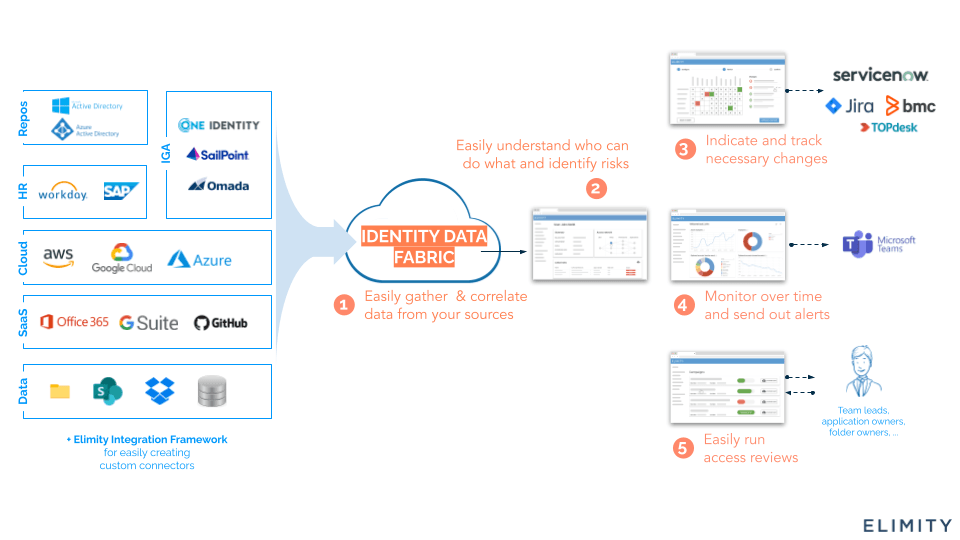
An Identity Data Fabric is a platform that brings together the data from your identity silos into a single, overarching identity data graph. It empowers organisations to collect, link, analyse, present, share, and continuously monitor identity data across all sources.
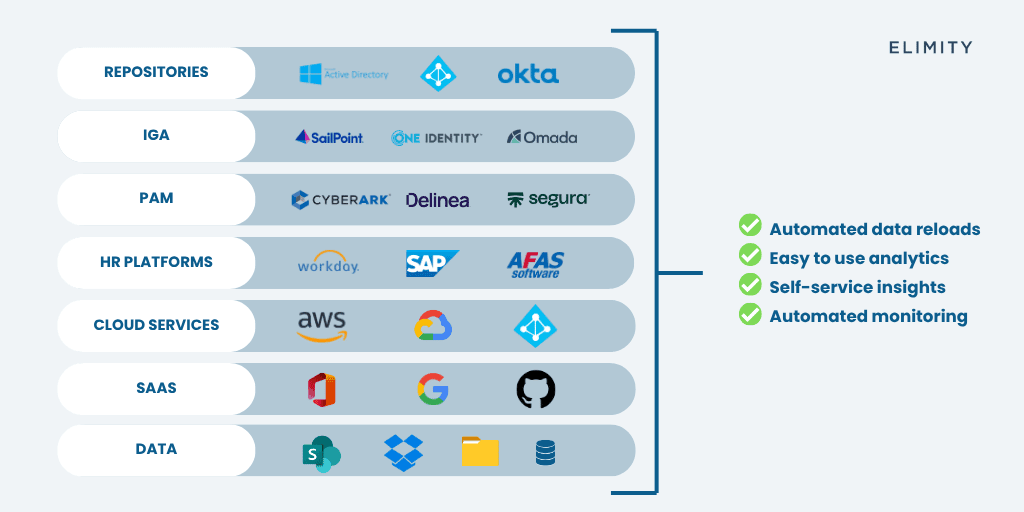
This results in the following benefits:
- Full visibility into who has access to what across every system
- Faster detection of orphaned accounts, excessive permissions, and toxic combinations
- Audit-ready compliance reporting for NIS 2, ISO 27001, and GDPR
- Reduced manual effort for IAM teams through automated data linking
Key Features of an Identity Data Fabric Platform
To achieve this, a proper Identity Data Fabric platform should come with the following features:
- Connectors to all major identity sources (AD, Azure AD, SaaS, HR, IGA, PAM)
- Automated data linking to correlate identities across systems
- A unified identity data graph with real-time updates
- Risk analytics and KPI dashboards out of the box
- Access review workflows connected to the live data
- Audit-ready reporting for regulators and management
Common Use Cases
An Identity Data Fabric is a versatile approach with many different use cases in practice:
- Identifying and eliminating orphaned and over-privileged accounts
- Running automated, auditable access reviews across all connected systems
- Providing self-service identity analytics to IAM and security teams
- Supporting IGA rollouts by providing a clean, enriched data foundation
Building Your Identity Data Fabric: 4 Steps
To move from identity chaos to control, your IAM strategy must start with data. Follow these four steps:
- Connect: Integrate all identity sources — HR, AD, SaaS, PAM, IGA — into one platform
- Link: Correlate identities across systems to build a unified identity graph
- Analyse: Apply risk controls and KPIs to surface the most critical gaps
- Act: Use the insights to drive access reviews, clean-ups, and continuous monitoring
The greatest impact is achieved when the Identity Data Fabric includes these key sources: Active Directory, Azure AD / Entra ID, HR system, IGA platform, SaaS applications, PAM tool, and privileged service accounts.
Ready to apply this to your environment?
Book a 20-minute call with our team — we'll walk you through Elimity Insights on your own scenarios. No pressure.